
The price hikes never end: A new round of price increases for memory chips is coming!
According to news from Kuai Technology on November 11, the memory market is preparing for a new round of price increases. Some leading memory manufacturers have verbally communicated their intention to raise prices for enterprise-grade memory chips to channel partners. Although formal price increase notices have not yet been issued, prices at the channel level have already started to rise.
An SK Hynix distributor stated that the prices of storage products have been rising almost daily recently, and upstream provincial distributors typically adjust their quotes weekly, which are then passed down through the downstream channels. The rising prices for recycled second-hand storage products have further pushed up the quotes.
Not all storage products are experiencing simultaneous price increases in this round. A Samsung distributor revealed that the current price hikes are mainly concentrated in the DRAM contract market and the enterprise-grade SSD market, while consumer-grade NAND flash memory has not seen a comprehensive price increase.
A report released by TrendForce on October 30 shows that, due to the continued increase in orders from North American data center customers, enterprise-grade SSD contract prices are expected to rise by 15% to 20% in the fourth quarter of 2026.
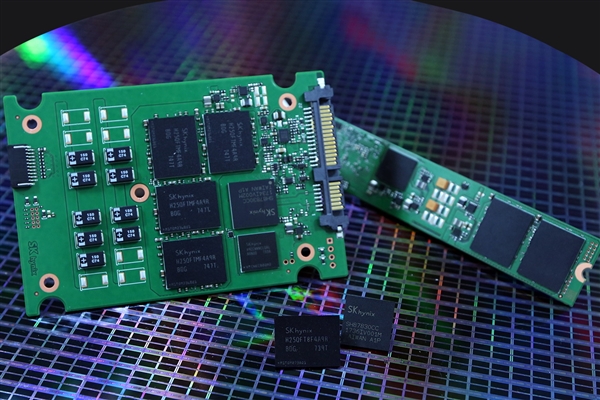
For downstream module manufacturers, they are currently facing not only rising costs but also insufficient supply.
Recently, Team Group CEO Chen Qingwen stated that even if companies have already signed purchase contracts, they are unable to secure sufficient supply and can only turn to the higher-priced spot market for procurement.
Since the original manufacturers prioritize the allocation of production capacity to large customers and high-profit orders, the purchasing pressure on small and medium-sized module manufacturers has further increased, while it is difficult for retail prices to rise simultaneously. Some distributors have even experienced an inversion where the cost of goods purchased is higher than the selling price.
However, in contrast to the enterprise market, the upward momentum in consumer-grade flash memory prices is weakening.
DRAMeXchange data shows that the average contract price of general-purpose 128Gb MLC NAND remained flat month-on-month in October. TrendForce's report for the same period also shows that the contract prices of MLC, TLC, and QLC NAND wafers have all stopped rising, and weak demand from consumers is limiting the room for original manufacturers to continue raising prices.
Data recently disclosed by Kioxia also shows that the quarter-on-quarter increase in the average selling price of NAND has narrowed from around 70% previously to around 20%, indicating that although flash memory prices are still rising, the rate of increase has slowed significantly.

Source: MyDrivers (Fast Technology). Content is presented with source attribution. Read the original report.
Back to News