AI cooling is also not cheap to buy! The capacity of the three major factories was hollowed out by HBM, and it was difficult to turn back.
Fast Technology reported on November 9 that recently, the technology industry stock pointed out that there was a sharp shock, which triggered the expectation of hardware enthusiasts for the price of PC accessories to fall.
But even as the AI market turns, PC memory prices are unlikely to fall back quickly to pre-2026 levels.
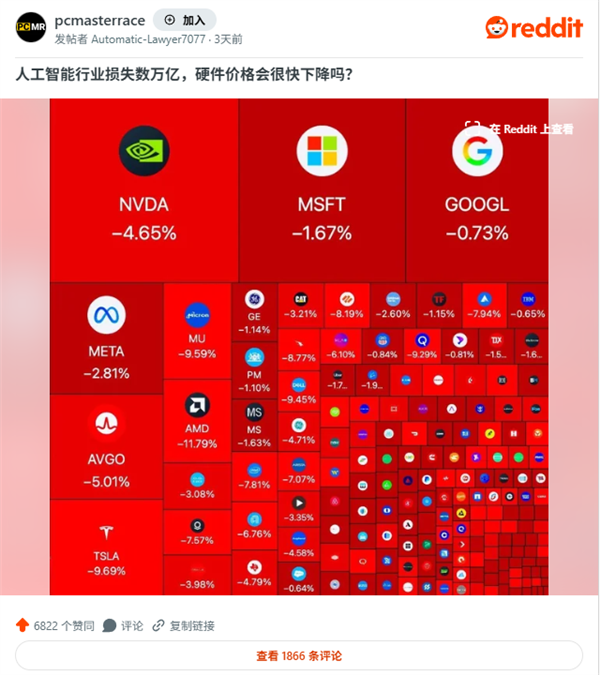
You know, this wave of memory price increases is different from the previous price increases driven by mining demand. This round of high memory prices stems from the deep structural transformation on the supply side: in the past year, the global memory chip giant has completely changed its production strategy in order to chase the huge profits brought by AI data centers.
To put it bluntly, the machines in the fab are now producing HBM for AI, not DDR5 for your computer.
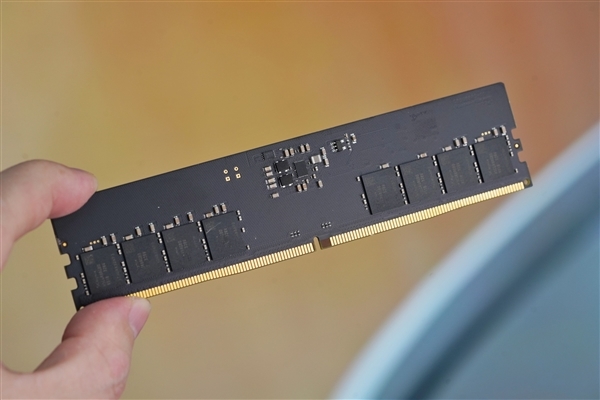
At present, Samsung, SK Hynix and Micron have switched most of the production capacity of DDR4, DDR5 and graphics memory to high-bandwidth memory (HBM) production, and Micron has almost stopped producing consumer-grade brand memory.
Moreover, this physical transfer of production capacity is irreversible, and these chips cannot be plugged into ordinary PC motherboards even if there is a surplus of HBM due to fluctuations in the AI market in the future.
Worse, the turnaround of the production line takes a long period of time. Memory consultant Ben Miles notes that fabs reconfigure their production lines to switch product types with at least a two- to three-month lag time.
This means that even if manufacturers decide to increase the supply of DDR5 today, the retail market will not see a change until three months later. Adding capacity through the construction of new plants can take years.
The conduction mechanism of the supply chain further stretches the curve of price regression. The newly produced chips need to be processed into memory bars by the module factory and then flowed to distributors and retailers before finally reaching consumers.
In the process, the backlog of consumer demand quickly swallows up new supply, keeping prices high. The reality can be very harsh for players looking forward to the memory price cut, and high-priced memory will become the norm in the next two or three years.
Source: MyDrivers (Fast Technology). Content is presented with source attribution. Read the original report.
Back to News